# What Happens During a Tandem Skydive? From Takeoff to Landing
Imagine standing at the open doorway of an aircraft thousands of feet above the ground. The wind is rushing past you, the landscape stretches out beneath your feet, and your instructor is preparing you for the jump.
A few moments later, you leave the aircraft and experience the sensation of freefall.
For someone who has never skydived before, the experience can sound intimidating. You might wonder what happens after arriving at the dropzone, how the instructor attaches you to the parachute system, what freefall feels like and how you eventually land.
The good news is that tandem skydiving is specifically designed to introduce beginners to the sport. You are securely connected to a qualified tandem instructor who manages the technical aspects of the jump while you experience the adventure.
Here is a step-by-step look at what happens during a tandem skydive, from takeoff to landing.
1. Arriving at the Skydiving Dropzone
Your experience begins when you arrive at the skydiving dropzone.
After checking in, the team will confirm your booking, verify the required details and guide you through the registration process. You may need to complete participation forms and provide identification as requested by the operator.
This is also when the team checks that you meet the applicable age, weight and other participation requirements.
If you have questions about the jump, equipment, weather or camera packages, this is a good time to ask.
At Official Skydive Thailand, the team guides visitors through the check-in and preparation process before their tandem experience.
2. The Pre-Jump Safety Briefing
Before boarding the aircraft, you will receive a briefing explaining how the tandem skydive works and what you need to do.
Your instructor will explain the basic body position, how to position your legs, what to do when approaching the aircraft door and how to prepare for landing.
You will also learn a few important instructions:
- How to position your body during freefall.
- How to respond to your instructor's instructions.
- When and how to raise your legs for landing.
- What to expect during parachute deployment.
- How to behave during the parachute descent.
You do not need previous skydiving experience to understand these instructions. The briefing is designed for beginners, and your instructor will guide you through the process.
Listen carefully and ask questions if anything is unclear.
3. Getting Your Skydiving Equipment
Once the briefing is complete, it is time to get ready.
You will be fitted with a tandem harness that connects you securely to your instructor. The instructor wears the tandem parachute system, which includes the main parachute and reserve parachute.
Your instructor will check the harness connections and equipment before the jump. The equipment is designed specifically for tandem skydiving, allowing two people to jump together.
You may also be provided with additional items such as goggles and other equipment required for the jump.
Your instructor will explain how the harness should fit and make sure you are properly secured before boarding the aircraft.
4. Boarding the Aircraft and Taking Off
Now comes the part when the experience starts to feel real.
You and your instructor will board the aircraft along with the other skydivers and crew. Once everyone is seated and ready, the aircraft takes off.
As the aircraft climbs, you will begin to see the landscape from a completely different perspective.
The ground becomes smaller, roads turn into thin lines and the surrounding scenery gradually opens up beneath you.
Depending on the dropzone, aircraft and jump plan, the climb to the planned exit altitude may take several minutes.
During this time, your instructor will continue preparing for the jump and may check your harness and equipment again.
For first-time skydivers, the aircraft ride is often a mixture of excitement, anticipation and nervousness.
5. Reaching Jump Altitude
As the aircraft approaches the planned exit altitude, the instructors and skydivers prepare for the jump.
Your instructor will make the final equipment checks and ensure that your harness connection is secure.
You will be reminded of the correct body position and the instructions covered during your briefing.
At this point, the aircraft door opens.
The wind becomes louder, the outside air rushes into the cabin and you get your first direct view of the sky below.
For many first-time jumpers, this is the moment when the reality of skydiving finally sets in.
Your instructor manages the technical preparations and guides you towards the aircraft exit.
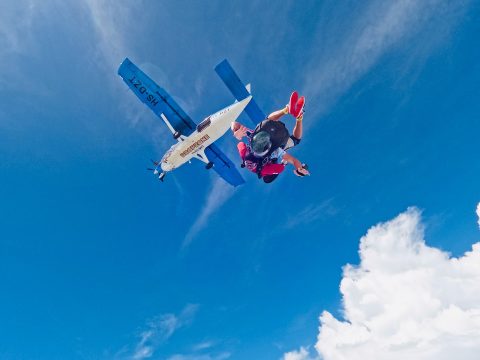
6. The Aircraft Exit
This is the moment you have been waiting for.
You and your instructor move towards the aircraft door and prepare to exit according to the instructor's procedure.
Once the exit is initiated, you leave the aircraft together.
For a brief moment, you may feel a sudden change in sensation as the aircraft disappears from above you and the open sky surrounds you.
Your instructor controls the tandem exit and stabilises the pair during the initial part of the jump.
You are now in freefall.
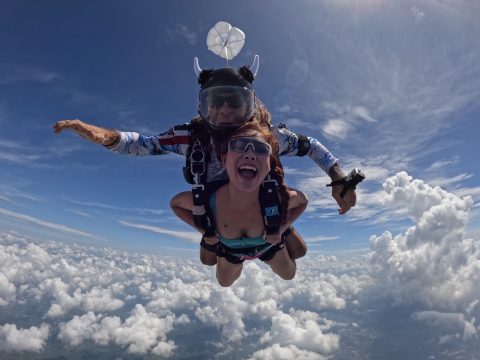
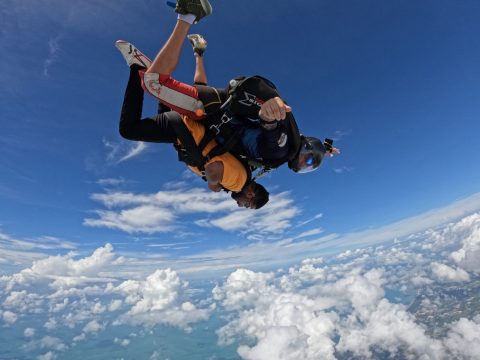
7. Experiencing Freefall
Freefall is one of the most memorable parts of a tandem skydive.
Rather than simply feeling as though you are falling, the experience is often described as a powerful rush of air supporting your body.
During freefall, you travel through the air at high speed while enjoying an uninterrupted view of the landscape below.
At a typical tandem skydiving altitude, freefall can last approximately 45 to 60 seconds, depending on the exit altitude and parachute deployment plan.
Your instructor controls the body position and monitors the jump while you enjoy the experience.
If you have selected a photography or video package, your camera operator or instructor may capture photographs and footage during this part of the jump.
You can smile, enjoy the view and take in the experience. There is no need to control the parachute or manage the technical aspects of the skydive.
8. Parachute Deployment
After the freefall portion, your instructor deploys the main parachute according to the planned deployment altitude and procedures.
You will notice a significant change in the sensation as the parachute opens and the freefall phase transitions into a controlled descent.
The aircraft-like rush of air becomes quieter, and the experience changes from high-speed freefall to a much calmer parachute ride.
Your instructor checks the parachute and continues managing the descent.
This is often the moment when first-time jumpers get the opportunity to appreciate the surrounding scenery without the intensity of freefall.
9. Flying Under the Parachute
Once the parachute is open and the descent is established, you can enjoy a completely different side of skydiving.
The parachute ride is generally much quieter than freefall. You can look around, take in the landscape and talk to your instructor.
Your instructor controls the parachute and manages the flight path towards the designated landing area.
Depending on conditions and operational procedures, your instructor may demonstrate turns or other manoeuvres during the descent.
For many people, the parachute ride becomes an equally memorable part of the experience because it provides time to appreciate the scenery and reflect on the jump.
10. Preparing for Landing
As you approach the landing area, your instructor will explain how to position your legs and body.
The exact landing technique depends on the conditions, parachute, instructor's procedures and landing area.
Your instructor controls the approach and determines the appropriate landing method.
One of the most important things you can do as a tandem passenger is follow the instructor's instructions.
Pay attention, keep your legs in the position you have been taught and avoid trying to stand up or make independent movements unless instructed.
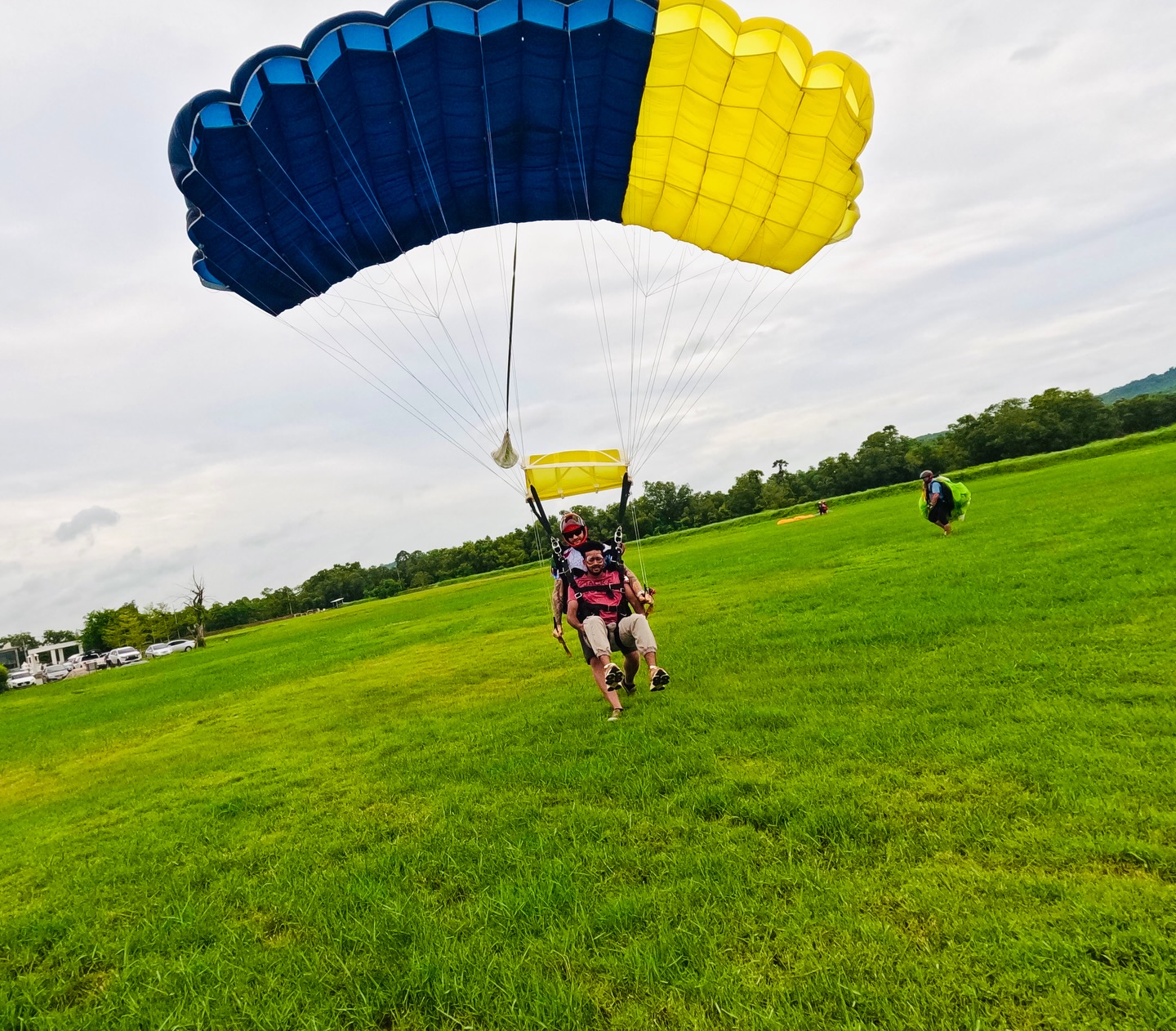
11. The Landing
The parachute gradually brings you towards the landing area.
Depending on the landing technique and conditions, you may land seated or in another position directed by your instructor.
Once you are safely on the ground, your instructor will help you disconnect from the tandem harness and guide you through the next steps.
And just like that, your first skydive is complete.
For many people, the excitement continues long after landing. You may find yourself replaying the aircraft exit, the freefall and the parachute ride in your mind.
It is also a great moment to celebrate with friends, family or other skydivers at the dropzone.
12. Receiving Your Photos and Videos
If you selected a photography or video package, you can look forward to seeing your jump from a completely different perspective.
Depending on your selected package, footage may include instructor handcam recordings or an additional outside camera flyer capturing the experience.
These recordings allow you to revisit the aircraft exit, freefall, parachute descent and landing.
If you are sharing your first skydiving experience with friends or family, the photographs and videos can also become a memorable way to show them what happened.
Check the package details and delivery arrangements when booking so you know which media services are included.
How Long Does a Tandem Skydive Take?
The total time required for a tandem skydive is longer than the actual freefall.
Your visit includes check-in, registration, briefing, equipment preparation, aircraft scheduling, the jump and post-landing activities.
Freefall itself generally lasts around 45 to 60 seconds, while the parachute descent usually takes several additional minutes.
The complete experience at the dropzone can take several hours. Aircraft scheduling, weather and operational conditions may affect the waiting time.
If you are travelling from Bangkok or Pattaya, allow additional time for road travel and avoid scheduling another important activity immediately afterwards.
Is Tandem Skydiving Suitable for First-Time Jumpers?
Yes. Tandem skydiving is one of the most common ways for beginners to experience the sport.
You do not need to complete a full skydiving course before making a tandem jump. Instead, you are attached to a qualified tandem instructor who manages the technical aspects of the experience.
Your responsibility is to follow the briefing, listen to your instructor and enjoy the jump.
However, all participants must meet the operator's eligibility requirements. Age, weight, health and other restrictions may apply, so confirm these details before booking.
What Should You Wear for a Tandem Skydive?
Comfortable clothing and secure footwear are important.
Most first-time jumpers should consider:
- Comfortable trousers or athletic clothing.
- A well-fitting T-shirt or top.
- Closed shoes, preferably trainers with secure laces.
- Clothing that allows you to move freely.
Avoid loose accessories and items that could come off during the jump. Follow the dropzone's instructions about clothing, jewellery and personal belongings.
The skydiving team will provide the necessary skydiving equipment.
Experience Your First Tandem Skydive with Official Skydive Thailand
A tandem skydive is more than simply jumping out of an aircraft. It is a complete experience that begins with preparation and briefing, continues through aircraft takeoff and freefall, and finishes with a parachute descent and landing.
For first-time visitors to Thailand, it can be a memorable addition to a holiday itinerary.
Official Skydive Thailand offers tandem skydiving experiences at its dropzone in Chakphong, Klaeng District, Rayong. Visitors can explore the available tandem packages, compare photography and video options and contact the team to plan their preferred jump date.
Whether you are travelling alone, with friends or as part of a holiday in Thailand, your first skydive could become one of the most memorable experiences of your trip.
Ready to experience your first jump?
Explore Official Skydive Thailand's tandem packages and start planning your skydiving experience.
Frequently Asked Questions
How long does freefall last during a tandem skydive?
Freefall during a typical tandem skydive lasts approximately 45 to 60 seconds, depending on the exit altitude and deployment plan.
Does tandem skydiving hurt?
Most people do not describe freefall as a painful experience. You will feel strong airflow and pressure from the harness, particularly around the legs and shoulders. The harness should be fitted and checked by your instructor.
Can I breathe during freefall?
Yes. You can breathe normally during freefall. The airflow may feel intense at first, but you can continue breathing throughout the jump.
Do I need previous skydiving experience?
No. Tandem skydiving is designed for beginners. You receive a briefing before the jump and remain attached to a qualified tandem instructor throughout the experience.
How high do you jump from?
The exit altitude depends on the operator's aircraft, jump plan and package. Confirm the planned altitude with the dropzone when booking.
Can I take my phone or camera during the jump?
Personal cameras and phones are generally restricted for tandem passengers because of safety requirements. Ask the operator about approved photography and video options.
What happens if I get nervous before jumping?
It is normal to feel nervous before your first skydive. Your instructor will explain the process, answer questions and guide you through the preparation. Tell the team if you have concerns before boarding.
What happens if the weather is unsuitable?
Skydiving requires suitable weather conditions. If the operator determines that conditions are unsuitable, the jump may be delayed or rescheduled according to the applicable booking policy.
Can I get photos and videos of my tandem skydive?
Yes, photography and video options may be available depending on your selected package. Check the current package descriptions to understand whether instructor handcam footage, an outside camera flyer or other media services are included.